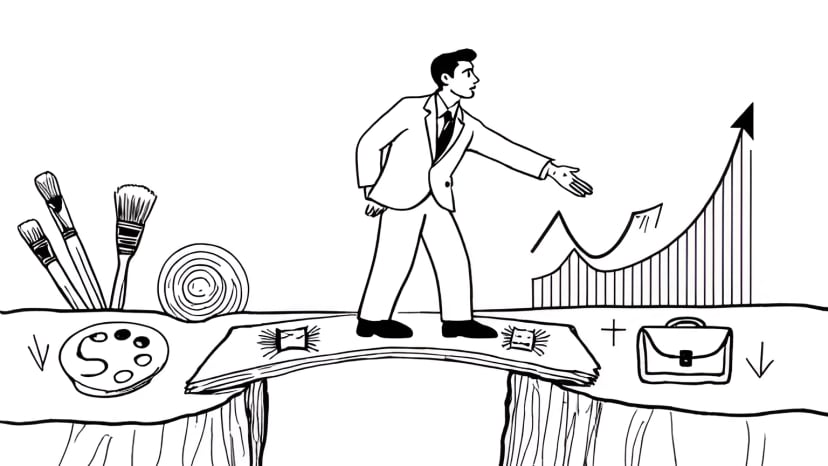
Bridging the Gap: When Design Fails to Fuel Your Business Ambitions
As entrepreneurs, we pour everything into building our ventures—late nights refining the product, strategic pivots to capture market share, and relentless pursuit of growth. Yet, too often, one critical element lags behind: the brand’s visual identity. I’ve witnessed ambitious founders achieve impressive milestones, only to realize their design no longer reflects—or supports—their evolving ambitions. This misalignment isn’t just aesthetic; it’s a silent barrier to greater success.
The Frustration of Misalignment
Imagine pouring your heart into a stunning brand redesign, only to watch leads slip away and conversions stall. As a brand designer who’s partnered with ambitious entrepreneurs, I’ve seen this frustration firsthand—it’s not the aesthetics that falter, but the disconnect from what truly drives your growth.
Unlocking Strategic Design
The real breakthrough comes when design isn’t just decorative but a strategic ally to your business goals. By aligning visual elements with measurable outcomes like customer engagement and revenue, you transform your brand from a pretty facade into a powerful engine for success.
The Evolving Landscape
In the evolving landscape of 2025, where web design trends lean toward hyper-personalization and AI-driven experiences, many entrepreneurs still view design as a one-time polish rather than an ongoing investment. Drawing from insights in recent discussions, founders often start with visuals that wow but fail to scale as their company matures—leading to inconsistencies that erode trust and hinder progress.
Exploring the Disconnect
Let’s unpack this misalignment. Early on, many businesses focus on “making it look good”—hiring a designer for a sleek logo and website that feels premium. This works initially, perhaps for the first 6 to 12 months, as it captures attention and builds initial momentum. But as your team expands and marketing demands grow, the cracks appear. New assets don’t match the old ones, product updates outpace design consistency, and suddenly, your brand feels fragmented.
This is where the shift to a design system becomes essential. Think of it as infrastructure, not decoration. A modular system with reusable components— like those in tools such as Relume’s Webflow Library, which offers layouts for feature sections—ensures scalability. For instance, I’ve drawn inspiration from design maturity models that emphasize starting small: address pain points like mismatched workflows between design and development teams, rather than building an exhaustive UI kit from scratch. This approach aligns with emerging trends, such as anticipatory interfaces that use AI to personalize user journeys, reducing friction and boosting conversions by inferring intent and adapting content in real time.
Consider a real-world example echoed in founder stories: A startup that raised funding found their site no longer matched their enterprise-level positioning. What started as an MVP looked like a side project, creating a credibility gap that cost deals. By redesigning with business goals in mind—focusing on elements that signal scale, like immersive storytelling and ethical, accessible interfaces—they closed bigger clients faster. Similarly, for a publicly traded company, building a system that integrated seamlessly with engineering not only drove millions in revenue but also improved retention by 33%, proving that strategic design removes barriers at every touchpoint.
The challenge? Convincing teams of the value. Endless debates on components or patterns can stall progress, but by prioritizing reuse and data-driven decisions, you foster alignment across design, development, and business objectives. Trends like expressive minimalism—with bold typography and depth effects—further enhance brand identity, while performance optimizations ensure speed, treating it as a core feature tied to revenue metrics.
In essence, misalignment isn’t just a design flaw; it’s a strategic oversight. By evolving from aesthetics to systems that convert trust, you position your brand for sustainable growth in a competitive market.
Let’s Connect and Align
If this resonates with your journey, I’d love to hear your thoughts—have you faced a similar disconnect? Share in the comments below, or reach out for a conversation on how we can align your design with your boldest business visions. Let’s build something timeless together.